Protect Teeth from Decay with Sealants
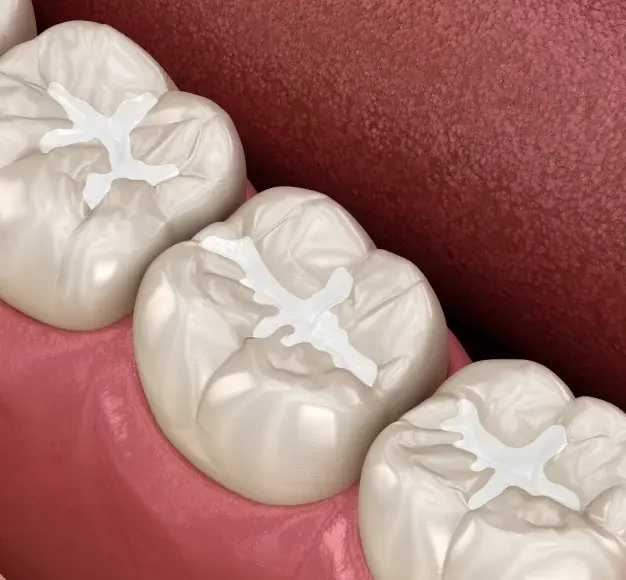
The chewing surfaces of back teeth have deep grooves and pits where plaque and food particles can collect. These areas can be difficult to clean thoroughly, increasing the risk of cavities over time. At Belmont Dentistry, we use dental sealants to help protect these vulnerable surfaces with a thin coating that creates a smoother barrier against plaque and bacteria.
Sealant application is generally quick, comfortable, and does not require drilling or altering healthy tooth structure. Our team can evaluate your teeth and help determine whether dental sealants are appropriate for your preventive care needs.
How Sealants Help Protect Your Smile
Dental sealants provide an added layer of protection for tooth surfaces that can be difficult to keep clean. We use sealants as part of a preventive approach to help patients reduce their risk of cavities and preserve healthy natural tooth structure.
- Sealants cover deep grooves where plaque and food particles can collect.
- They help protect back teeth that are more prone to cavities.
- Application is typically quick, gentle, and comfortable for patients.
- Smoother surfaces can make everyday brushing more effective.
- Sealants help preserve healthy enamel by preventing decay before it develops.
- Preventing cavities can help reduce the need for future restorative treatment.
Suitable Candidates for Sealants
Dental sealants can benefit patients of different ages, not just children. They may be helpful for newly erupted permanent molars with deep grooves, teens developing brushing habits, or adults with cavity-prone back teeth. Patients with a history of cavities may also benefit from added protection. Sealants are generally best suited for teeth without existing decay or large fillings. During an evaluation, Belmont Dentistry can assess your teeth and determine whether sealants are appropriate.
How a Sealant Appointment Works
Applying sealants is one of the quickest preventive treatments in dentistry. Because there is no drilling, most patients find the experience easy, and many tell us they hardly notice it. Here is what to expect.

A careful check of each tooth: We examine the teeth and take digital X-rays when needed to confirm the grooves are clean and free of decay.
Thorough cleaning: Each tooth receives a precise cleaning to remove plaque from the pits and grooves so the sealant can bond properly.
Keeping the area dry: Sealants bond best on a completely dry surface. Our DryShield system gently keeps saliva and the tongue away from the treated teeth, which helps the process move efficiently.
A conditioning gel: A mild gel is briefly placed on the chewing surface to create a slightly textured finish that helps the sealant hold.
Sealant application: After the gel is rinsed away and the tooth is dried, we paint the sealant onto the grooves, where it flows into every pit and fissure.
Hardening with a curing light: A special light hardens the material within seconds, creating a strong protective layer.
A final bite check: We make sure your bite feels natural and review how to care for your sealants. You can usually eat and drink normally right away.
Long-Term Care for Dental Sealants
Dental sealants can provide protection for several years when properly maintained, but they are not permanent. Normal chewing can gradually wear the coating, which is why Belmont Dentistry checks sealed teeth during routine cleanings and exams. If a sealant becomes damaged, worn, or partially comes away, our team can evaluate the tooth and determine whether repair or reapplication is appropriate.
Maintaining good oral hygiene also helps protect the teeth beneath and around your sealants. Continue brushing twice daily with fluoride toothpaste, flossing every day, and avoiding habits such as chewing ice or hard objects. Regular dental visits allow us to monitor your sealants and overall oral health, helping you maintain their protective benefits over time.
Protect Vulnerable Teeth with Personalized Care
Preventing a cavity is always easier than repairing one. We are here to help patients protect their teeth with personalized preventive care. If you are considering dental sealants, our team can examine your teeth, explain whether sealants may be beneficial, and recommend an approach based on your oral health needs. Call us at (480) 530-0492 to speak with our team.
Frequently Asked Questions
About Dental Sealants
Dental sealants are thin, protective coatings, usually made of a plastic resin, that are applied to the chewing surfaces of back teeth. They fill in the deep grooves and pits where plaque and bacteria collect, creating a smooth barrier that helps prevent cavities.
No. The procedure is painless for most patients because it involves no drilling and typically requires no numbing. The teeth are cleaned, conditioned, coated, and hardened with a light, and the whole process is gentle and straightforward.
Sealants often last for several years and can remain effective for up to around ten years with proper care. They wear down gradually from chewing, so we check them during regular visits and repair or replace them if needed.
Yes. Dental sealants have been used for decades and are widely recommended by dental professionals as a safe and effective preventive treatment. If you have questions about the materials we use, we are happy to discuss them before your appointment.
Yes. While sealants are commonly placed on children’s and teens’ new molars, adults with deep grooves and no existing decay or fillings in those teeth can benefit too. We will evaluate your teeth to see if sealants are a good fit.
Sealants are intended for healthy teeth. If a tooth already has active decay, it needs to be treated with a filling or another restoration first. We examine each tooth carefully before recommending a sealant.
In most cases, yes. The sealant hardens under a curing light during the appointment, so it is ready to use right away. We will let you know if there is anything specific to avoid after your visit.
In most cases, yes. The sealant hardens under a curing light during the appointment, so it is ready to use right away. We will let you know if there is anything specific to avoid after your visit.
Many dental plans cover sealants, particularly as a preventive service, though coverage can depend on age and which teeth are treated. Our team can verify your benefits before treatment, and we offer an in-house dental savings plan for patients without insurance.