
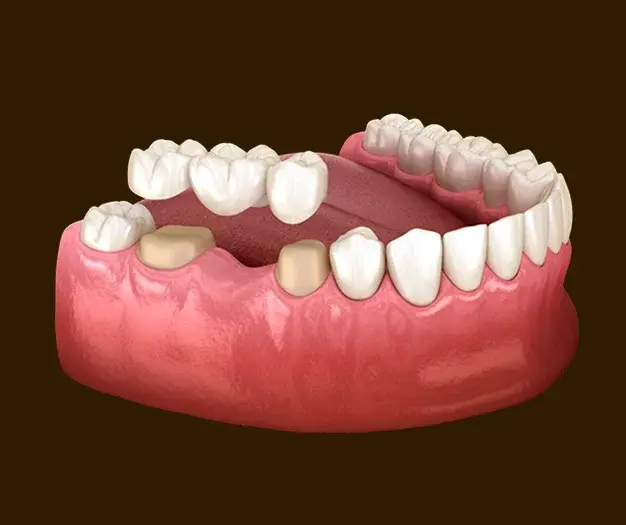
Restore Your Smile with a Dental Bridge
A missing tooth can affect much more than the appearance of a smile. Gaps may make chewing certain foods less comfortable, influence speech, and allow neighboring teeth to shift into the open space. Dental bridges offer a fixed tooth replacement option that fills the gap with an artificial tooth supported by neighboring teeth or other appropriate structures.
At Belmont Dentistry, bridge treatment begins with understanding the location of the missing tooth, the condition of the surrounding teeth, and your overall oral health. A carefully planned dental bridge can restore a more complete smile while helping you return to comfortable everyday function.
Benefits of Dental Bridges
Replacing a missing tooth is about restoring the way your smile functions as well as how it looks. A dental bridge can provide several practical benefits when it is an appropriate solution for your needs.
- A bridge replaces the missing portion of your smile with a natural-looking artificial tooth.
- Filling the space can make it easier to bite and chew comfortably.
- Replacing a missing tooth may help improve speech affected by certain tooth gaps.
- A bridge can restore continuity between neighboring teeth.
- Unlike removable appliances, a traditional bridge is secured in place rather than taken out for daily use.
- A customized bridge is designed to fit within the existing smile and bite.
- Restoring a missing tooth can make smiling, speaking, and social interactions feel more natural.
Types of Dental Bridges
Not every missing-tooth situation is the same, which is why bridge design depends on the location of the gap and the available supporting structures. Different types of dental bridges may be considered based on individual treatment needs.
Traditional Dental Bridges
A traditional bridge uses an artificial tooth, called a pontic, supported by dental crowns placed on adjacent teeth. This design is commonly considered when suitable natural teeth are located on both sides of the missing tooth.
Implant-Supported Bridges
Implant-supported bridges use dental implants for support instead of relying on neighboring natural teeth. This approach can be considered when multiple adjacent teeth are missing and the patient has appropriate bone and oral health for implant treatment.
Our Treatment Process
Planning a dental bridge requires more than simply filling an empty space. The supporting teeth, bite, surrounding tissues, and appearance of the final restoration all need to be considered. Belmont Dentistry takes a step-by-step approach to help ensure the bridge is planned around your individual smile and oral health.

Evaluate the Missing Tooth and Surrounding Area: The first appointment focuses on examining the gap and the teeth or structures that may support the bridge. Your bite, gum health, and overall condition of the area are also considered during treatment planning.
Plan the Restoration: Once a bridge is determined to be suitable, the restoration is planned according to the location of the missing tooth and the appearance and function needed. The goal is to create a replacement that fits naturally within your smile.
Prepare the Supporting Teeth: For a traditional dental bridge, the neighboring teeth may need to be prepared so they can support the restoration. The extent of preparation depends on the type of bridge and the specific circumstances of the case.
Create and Fit the Bridge: The bridge is fabricated to correspond with the prepared area and surrounding teeth. During placement, the fit, bite, appearance, and overall comfort are evaluated before the restoration is secured.
Adjust and Maintain Your New Smile: Once the bridge is in place, any necessary adjustments can be made to help achieve a comfortable bite. Proper brushing, flossing around and beneath the bridge, regular dental visits, and attention to gum health can help protect the restoration and supporting teeth.
Why Replacing A Missing Tooth Matters
Leaving a missing tooth untreated can have effects beyond the visible gap. Neighboring teeth may gradually move toward the open space, while the opposing tooth can shift because it no longer meets a tooth in the same way during biting. Changes in tooth position can affect how the bite comes together and may make certain areas more difficult to clean.
Replacing the missing tooth can help restore the structure of the dental arch and provide a functional surface for chewing. Belmont Dentistry considers these factors when planning bridge treatment, with attention to both immediate restoration and the long-term health of the surrounding teeth.
Restore The Gap With A Custom Dental Bridge
A missing tooth does not have to remain an open space in your smile. Belmont Dentistry provides personalized dental bridge treatment focused on restoring chewing function, supporting tooth alignment, and creating a natural-looking result. If you are considering replacing a missing tooth, call us at (480) 530-0492 to speak with our team.
Frequently Asked Questions
About Dental Bridges
A dental bridge is a fixed dental restoration used to replace one or more missing teeth. It typically contains an artificial tooth that fills the gap and is supported by neighboring teeth, dental implants, or another appropriate structure.
The lifespan of a dental bridge varies based on factors such as oral hygiene, bite forces, supporting tooth health, and regular dental care. Proper cleaning and routine examinations can help protect the bridge and the teeth supporting it.
Dental bridges are considered fixed restorations, meaning they are secured in place rather than designed for daily removal. However, they are not necessarily permanent for life and may eventually require repair or replacement depending on their condition.
Yes. Depending on the location of the missing teeth and available support, a dental bridge may replace multiple adjacent teeth. An evaluation is needed to determine whether a bridge can provide adequate support for the specific situation.
A traditional bridge generally relies on neighboring natural teeth for support, while an implant-supported bridge uses dental implants. The appropriate approach depends on factors such as the number of missing teeth, bone support, surrounding teeth, and overall oral health.
A properly fitted dental bridge is designed to restore chewing function. After placement, patients may need a short adjustment period, but a bridge can allow many everyday foods to be eaten comfortably when properly cared for.
Brushing twice daily and cleaning beneath the artificial tooth are important for maintaining the bridge and surrounding tissues. Special flossing techniques, floss threaders, or other cleaning aids may help reach areas that a standard toothbrush cannot.
Dental bridges are custom designed to fit within the surrounding teeth and smile. Their appearance depends on factors such as the restoration’s design, material, shade, position, and the characteristics of the neighboring teeth.