
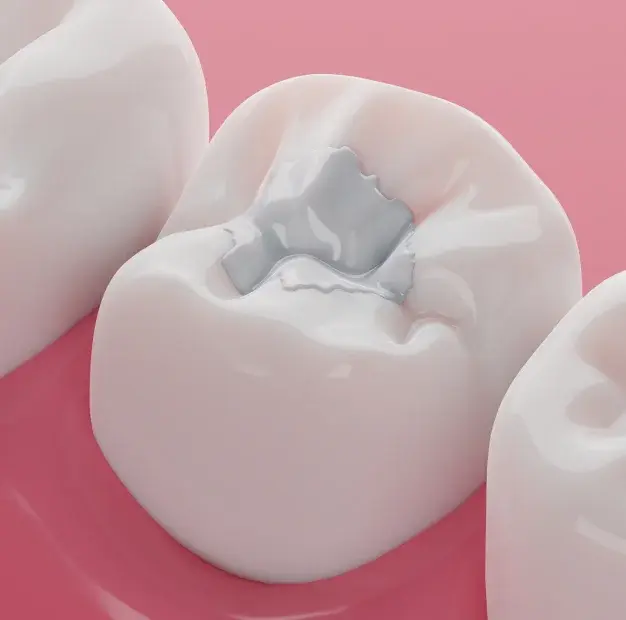
Restore Damaged Teeth with Natural-Looking Fillings
Composite fillings are designed to restore your tooth while keeping your smile looking natural. At Belmont Dentistry, we carefully evaluate the tooth and surrounding smile before selecting a composite shade that blends with your natural enamel. Whether you need to address decay, a minor chip, a small imperfection, or an area of wear, we focus on creating a restoration that complements the shape and appearance of your tooth.
Composite fillings are one of the most common restorative treatments in general dentistry, used for everything from a small cavity caught during a routine cleaning to repairing a chipped or worn tooth.
Why Choose Tooth-Colored Composite Fillings?
Composite fillings offer more than cavity repair. The material can be bonded directly to the tooth, allowing the restoration to support the remaining healthy structure while providing an aesthetically pleasing result.
- Composite material can be shade-matched to surrounding teeth for a subtle restoration.
- Removing decay and restoring only the affected area can help preserve healthy tooth structure.
- Composite material may be suitable for cavities as well as certain minor chips, cracks, or worn areas.
- The material bonds to the tooth surface, helping create a secure restoration.
- Local anesthesia can be used when appropriate to help keep the procedure comfortable.
- A properly placed filling helps restore the tooth’s shape and its ability to handle normal chewing.
Signs You May Need a Filling
Even minor imperfections can affect the appearance or comfort of your smile. You may benefit from an evaluation if you notice a visible chip, crack, rough edge, discoloration, or worn area on a tooth. Sensitivity to hot, cold, or sweets may also indicate an underlying concern that needs attention. An older filling that is cracked, loose, or noticeably worn may affect your smile as well. Belmont Dentistry can evaluate these changes and discuss whether a tooth-colored filling or another cosmetic treatment may be appropriate.
What to Expect During Composite Filling Treatment
Composite filling treatment is designed to address the damaged portion of a tooth while preserving as much healthy structure as possible. The exact approach depends on the location and extent of the cavity or other damage.

Examine the Affected Tooth: The tooth is evaluated to determine the extent of decay or damage. Diagnostic imaging may be recommended when additional information is needed to assess areas that cannot be fully evaluated during a visual examination.
Prepare the Tooth: The affected portion of the tooth is carefully removed to eliminate decay and create a clean surface for the restoration. Healthy tooth structure is preserved whenever possible.
Place the Composite Material: A tooth-colored composite resin is applied to the prepared area in layers. Each layer is shaped and hardened as needed to build the restoration within the tooth.
Shape the Restoration: The composite is contoured to follow the natural anatomy of the tooth. Careful shaping helps the restored tooth function naturally and fit comfortably within the bite.
Polish and Check the Bite: The completed filling is polished, and the bite is checked to make sure the restored tooth feels comfortable when the teeth come together. Adjustments can be made when needed.
Caring for a Tooth After a Composite Filling
Caring for a tooth after a composite filling involves many of the same habits that help protect your natural teeth. Brushing twice daily with fluoride toothpaste, flossing every day, attending routine dental examinations, and limiting frequent exposure to sugary foods and drinks can help reduce the risk of new decay around the restored tooth. Good oral hygiene also supports the health of the surrounding gums and tooth structure.
Composite fillings are designed to restore function and blend naturally with your smile, but they can still experience wear over time. Avoid chewing on hard objects, biting ice, or using your teeth to open packages. If you notice sensitivity, a rough edge, discomfort, or a change in the filling, Belmont Dentistry can evaluate the restoration and recommend appropriate care.
Give Your Tooth the Care It Needs
If you have a sensitive tooth, a visible cavity, or an old filling that looks worn, now is the time to have it checked. Our Phoenix team is ready to evaluate the tooth, show you what we see, and recommend the best way to restore it. Call us at Phoenix to schedule your consultation.
Frequently Asked Questions
About Composite Fillings
A composite filling is a tooth-colored restoration made from a blend of plastic resin and fine glass particles. It is used to repair cavities, chips, and worn areas of a tooth, and it bonds directly to the tooth for a strong, natural-looking result.
Composite fillings commonly last five to ten years or longer, depending on the size of the filling, your bite, and how well you care for your teeth. Regular checkups help us monitor them and replace any that show signs of wear.
Most patients feel little to no pain. We numb the area with local anesthetic before beginning, so you should only feel pressure, not pain. If you are nervous, let us know and we will go at a pace that feels comfortable.
Many fillings take about 30 minutes to an hour, though the time varies with the size and location of the cavity and how many teeth are treated. Because the material is hardened with a light, the filling is completed in one visit.
Composite sets immediately under the curing light, so it is technically ready to use right away. However, you will likely be numb for a few hours, so we recommend waiting until the numbness wears off to avoid biting your cheek, lip, or tongue.
Yes. Composite resin has been widely used in dentistry for many years and is considered a safe, well-established material. If you have questions about the materials we use, we are happy to talk with you before your appointment.
Mild sensitivity to hot, cold, or pressure is common for a few days to a couple of weeks after a filling, especially if the cavity was deep. It usually fades on its own. If it lingers, gets worse, or your bite feels uneven, contact our office.
Many dental plans cover fillings as a basic restorative service, though coverage varies. Our team can verify your benefits before treatment, and we offer an in-house dental savings plan for patients without insurance.