
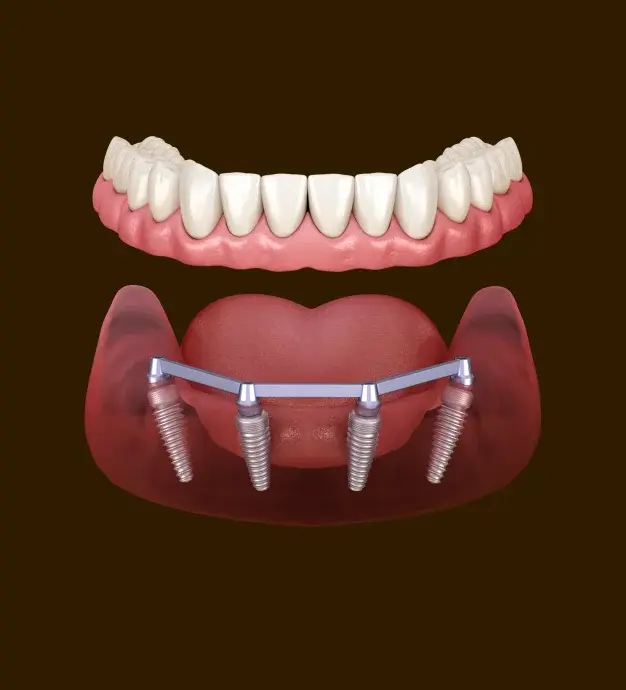
Replace Multiple Missing Teeth with All-on-4 Implants
Living with extensive tooth loss can affect much more than the appearance of a smile. Missing teeth can make chewing difficult, change the way the bite comes together, and leave patients searching for a more stable alternative to removable teeth. All-on-4 dental implants provide a way to replace an entire arch using four strategically positioned dental implants as support for a fixed prosthetic restoration.
At Belmont Dentistry, All-on-4 implant treatment begins with a detailed evaluation of the teeth, gums, jawbone, and overall oral health. Advanced imaging and careful treatment planning help determine whether this approach is appropriate and how implant placement should be coordinated with the final restoration. The goal is to create a stable, functional replacement that works as part of the overall smile.
Why Consider All-on-4 Dental Implants?
All-on-4 treatment can provide a comprehensive solution for patients who have lost most or all of the teeth in an arch. Because the replacement teeth are supported by implants rather than resting solely on the gums, the treatment is designed around stability and function.
- Replace an entire upper or lower arch of missing teeth with an implant-supported restoration.
- Four strategically positioned implants provide support for the replacement teeth.
- A stable restoration can make everyday biting and chewing more functional.
- The replacement teeth are designed to complement the shape and appearance of the smile.
- Dental implants provide stimulation to the surrounding bone, although individual results depend on overall oral health.
- All-on-4 treatment can provide a fixed alternative to traditional removable dentures when clinically appropriate.
Who May Be a Candidate for All-on-4 Implants?
All-on-4 dental implants may be considered for adults with extensive tooth loss, severely damaged teeth, or loose and uncomfortable dentures who want a fixed full-arch solution. Potential candidates need adequate bone support or the ability to undergo appropriate implant treatment, along with suitable gum and overall oral health. Belmont Dentistry evaluates your remaining teeth, bone, gums, dental needs, and treatment goals to determine whether All-on-4 implants are appropriate for you.
How All-on-4 Implant Treatment Comes Together
Replacing an entire arch requires more than simply placing implants. The position of each implant must be considered alongside the jaw anatomy, bite, and design of the final teeth. Treatment is therefore carefully planned before implant placement begins.

Comprehensive Implant Evaluation: The first stage involves examining the condition of the teeth, gums, jawbone, and bite. Existing dental concerns are identified so the treatment plan can account for the overall condition of the mouth.
Three-Dimensional Treatment Planning: Advanced imaging can provide detailed information about the jawbone and surrounding anatomical structures. This information helps determine appropriate implant positions and supports precise treatment planning.
Preparing the Treatment Site: If remaining teeth are severely compromised, extractions or other preparatory procedures may be necessary. Any required preliminary treatment is planned around the eventual implant-supported restoration.
Strategically Positioning the Implants: Four dental implants are placed at carefully selected locations within the jaw. Their positioning is planned to provide a stable foundation for the full-arch restoration while taking the available bone and surrounding anatomy into consideration.
Attaching the Full-Arch Restoration: The implants provide support for a custom full-arch prosthesis. The restoration is designed to replace the missing teeth while supporting appropriate bite function and a natural-looking appearance.
Monitoring Healing and Long-Term Function: After treatment, the implants and restoration are monitored as healing progresses. Follow-up care and regular dental visits help evaluate the condition of the implants, restoration, gums, and surrounding tissues.
Recovery And Care After All-On-4
Recovery after All-on-4 treatment can involve some swelling, mild soreness, or minor bruising during the first few days. Belmont Dentistry provides clear aftercare instructions to help you protect the treatment area and support healing. Following a soft-food diet as recommended, keeping your mouth clean with the suggested rinses and techniques, and avoiding smoking can support the healing process. Resting and limiting strenuous activity during the early recovery period can also be beneficial.
Follow-up appointments allow Belmont Dentistry to monitor your healing and implant integration. If you notice unexpected discomfort or have concerns during recovery, our team can provide guidance and determine whether additional evaluation is needed.
Personalized Expert Guidance For All-On-4 Treatment
You do not have to keep living with dentures that slip or teeth that are failing. Belmont Dentistry provides personalized All-on-4 treatment in Peoria, AZ, helping patients restore dental function and regain confidence in their smiles. Our team evaluates your oral health, discusses your goals, and guides you through each stage of treatment. Get in touch with our team at (480) 530-0492 to schedule your consultation.
Frequently Asked Questions
About All-on-4 Implants
All-on-4 is a full-arch tooth replacement technique that uses four dental implants to support an entire arch of fixed, custom-made teeth. Two implants are placed straight in the front of the jaw, and two are angled in the back to take advantage of the strongest available bone.
Good candidates are typically missing most or all of their teeth in an arch, or have remaining teeth that cannot be saved. They also need adequate bone and healthy gums, though additional steps may be possible if bone is limited. A 3D scan and exam will confirm whether All-on-4 is suitable.
Implant placement is often completed in a single surgical visit, and in many cases a temporary set of teeth can be attached at that time. The implants then heal for several months before your permanent teeth are placed, so the full process takes a few months in total.
The procedure is performed with anesthesia, so you should feel pressure but not pain. Some soreness and swelling are normal afterward and typically improve within several days. We will explain what to expect and provide guidance for staying comfortable.
With good oral hygiene and regular dental visits, the implants themselves can last for decades. The attached teeth may need maintenance or replacement over time because of normal wear, which is something we monitor at checkups.
Often not. Because the back implants are angled to use available bone, many patients can avoid grafting. Your 3D scan will show whether you have enough bone, and we will talk through any additional steps if you do not.
Brush twice daily and clean under the bridge every day with tools such as interdental brushes, floss threaders, or a water flosser. Visit our office regularly for cleanings and checkups, and wear a night guard if you grind your teeth.
The cost depends on factors such as the number of teeth being replaced, preparation needed, and the materials used, so we provide a personalized estimate after your exam. Some dental plans cover a portion of implant-related treatment. We also offer an in-house dental savings plan and CareCredit financing.