
BOOK ONLINE


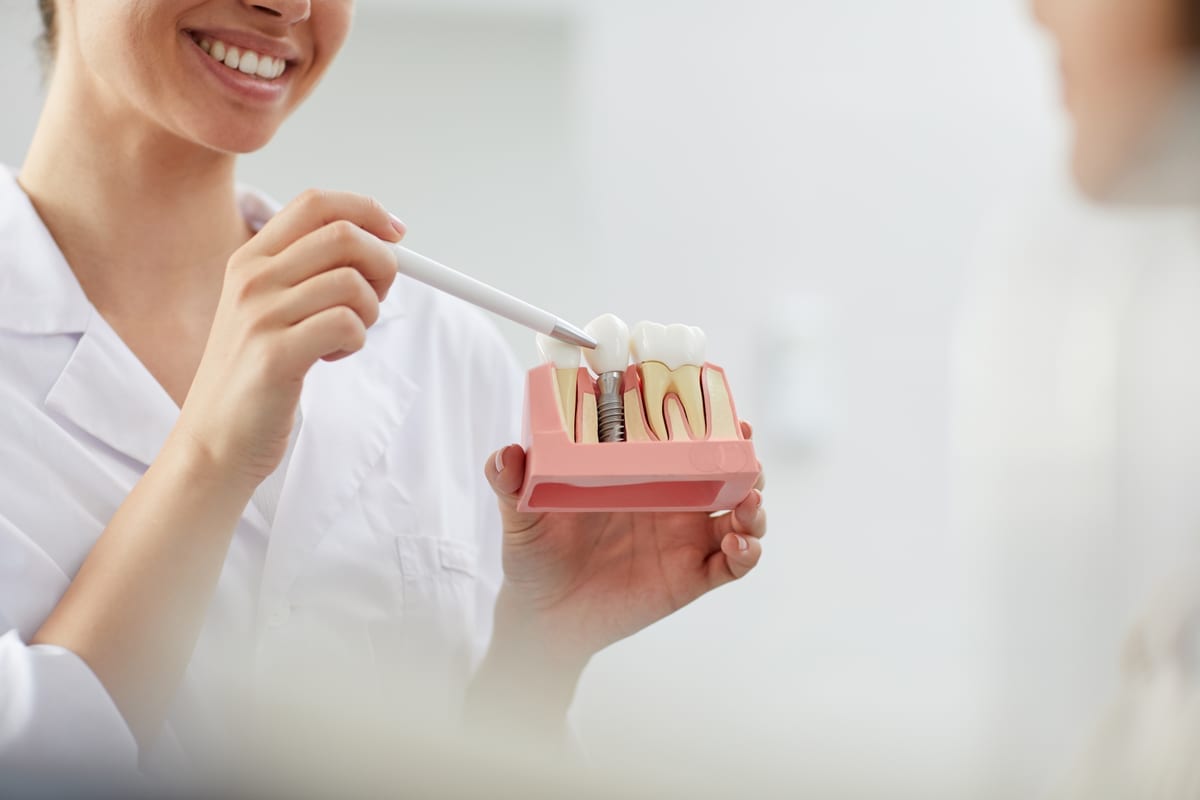
Many Peoria residents put off replacing missing teeth for months — sometimes years. It feels like a problem you can deal with later. But here’s what most people don’t realize: your jawbone is shrinking right now, and waiting on implants gets costlier the longer you delay. Understanding the warning signs can save you significant time, money, and discomfort down the road.
Why Bone Loss Happens After Tooth Loss in Peoria
Your jawbone stays healthy because tooth roots stimulate it every time you chew. When a tooth goes missing, that stimulation stops. The bone beneath the empty socket begins to resorb — essentially dissolving itself because the body no longer sees a reason to maintain it.
This process starts within weeks of losing a tooth. In the first year alone, you can lose up to 25% of the bone volume in that area. After several years, the loss becomes significant and visible.
Bone resorption doesn’t just affect your jaw structure. It changes your facial appearance, shifts your remaining teeth, and limits your future treatment options. The longer you wait, the more complex — and expensive — the solution becomes.
Warning Signs You’ve Already Waited Too Long
Most people don’t notice bone loss until a dentist points it out on an X-ray. But there are physical warning signs worth paying attention to right now. Recognizing them early can be the difference between a straightforward implant and a costly bone graft procedure.
Watch for these red flags:
- Sunken or collapsed facial appearance — Your cheeks may look hollow near the missing tooth area
- Shifting or drifting teeth — Neighboring teeth tilt into the gap over time
- Bite changes — Your top and bottom teeth no longer meet the way they used to
- Difficulty chewing certain foods — You avoid hard or chewy items without realizing why
- Loose-feeling dentures or partials — The ridge they rest on has shrunk
- Gum recession near the gap — The tissue pulls back as bone volume decreases
If you recognize any of these signs, it’s time to act. Dr. Puneet Sandhu at Belmont Dentistry Peoria sees patients regularly who waited and now face more involved treatment plans than they expected.
How Shifting Teeth Make Everything More Complicated
Teeth are not as fixed as they look. They shift constantly in response to pressure and space. When a gap opens up, neighboring teeth begin to lean toward it. Opposing teeth in the other jaw start to over-erupt — meaning they grow downward or upward into the empty space.
This misalignment creates a cascade of problems. Chewing forces distribute unevenly across your remaining teeth. That accelerates wear, increases fracture risk, and can strain your jaw joints.
Correcting these shifts before placing an implant often requires orthodontic work. That adds time and expense to your treatment. Patients who act before significant shifting occurs typically have faster, simpler implant placements.
Beyond function, misaligned teeth affect your smile’s appearance. Some patients explore Cosmetic Dentistry Peoria options alongside implants to address both structure and aesthetics at the same time.
The Real Cost of Waiting: What Bone Grafting Adds to Your Treatment
Dental implants need adequate bone to anchor into. If you’ve lost too much, your dentist must rebuild that foundation before placing the implant. This procedure is called bone grafting.
Bone grafting is effective — but it adds time and cost to your treatment plan. The graft must heal before implant placement can begin. That healing period can take three to six months. Altogether, delayed treatment can stretch a process that once took a few months into a year-long journey.
Here’s what the treatment timeline typically looks like when bone loss is significant:
- Bone graft procedure and healing — 3 to 6 months
- Implant placement — surgical appointment
- Osseointegration — implant fuses with bone over 3 to 6 months
- Abutment and crown placement — final restoration
Compare that to patients who act early. With sufficient bone density, steps one and two merge. Treatment wraps up faster and with fewer appointments. The financial difference is substantial.
Difficulty Chewing Is Your Body Sending a Message
Chewing difficulty is one of the most overlooked warning signs. Patients adapt so gradually they stop noticing. They unconsciously chew only on one side. They avoid steak, raw vegetables, or crusty bread. They write it off as a preference rather than a problem.
But your body is telling you something. Uneven chewing stresses certain teeth and spares others. Over time, the overworked teeth wear down faster. Jaw muscles on one side become overdeveloped while the other side weakens.
Nutritional habits shift too. Studies show people with untreated tooth loss tend to eat fewer fruits and vegetables because of chewing difficulty. That affects overall health in ways that go far beyond your mouth.
Restoring a missing tooth with an implant gives you back full chewing function. You eat what you want. You chew evenly. Your jaw muscles work the way they’re designed to. Patients at Belmont Dentistry Peoria consistently report that improved chewing function was the most immediate benefit they noticed after implant placement.
What to Expect When You Visit Belmont Dentistry Peoria
Getting started is straightforward. Dr. Sandhu will take digital X-rays and possibly a 3D cone beam scan to assess your current bone volume. This gives a clear picture of what your jawbone looks like today and what’s needed to move forward.
From there, you’ll receive a personalized treatment plan. Some patients have enough bone for immediate implant planning. Others need a graft first. Either way, you’ll know exactly what to expect, how long it takes, and what each phase involves.
The practice also offers options for patients whose missing teeth have affected their smile’s overall appearance. Whether that involves implants alone or a combination approach with Cosmetic Dentistry Peoria services, the goal is always a result that looks and functions naturally.
No two patients are alike. The right time to start is always sooner rather than later — but it’s never too late to explore your options with a qualified team.
Take Action Before the Cost Goes Higher
Bone loss is silent and steady. Every month you wait, the window for simpler treatment narrows. The warning signs are real — shifting teeth, chewing difficulty, a changing facial profile — and they deserve attention now rather than later.
Peoria residents have access to experienced implant care right in their community. Dr. Puneet Sandhu and the team at Belmont Dentistry Peoria are here to assess where you stand today and map out the most efficient path forward. The sooner you come in, the more options you’ll have. Book Now to schedule your appointment with our team.
Frequently Asked Questions
How quickly does jawbone loss begin after losing a tooth?
Bone resorption can begin within weeks of tooth loss. In the first year, you may lose up to 25% of bone volume in the affected area. Early action significantly reduces the complexity of future treatment.
Can bone grafting fully restore lost jawbone?
Bone grafting is an effective way to rebuild bone volume before implant placement. It may not fully restore the original bone density, but it typically creates enough foundation for a successful implant. Outcomes depend on how much bone was lost and how long the tooth has been missing.
Will shifting teeth go back to normal on their own?
No. Teeth that have drifted into a gap do not return to their original position without intervention. Orthodontic treatment or careful implant planning may be needed to address misalignment before or alongside implant placement.
Is there an age limit for dental implants?
There is no upper age limit for dental implants. Adults of any age with sufficient bone volume and good overall health are typically candidates. Younger patients must wait until jaw development is complete, which is usually in the late teens.
What happens if I choose a denture instead of an implant?
Dentures restore appearance and some function but do not stimulate the jawbone. Bone loss continues beneath a denture over time. This causes the denture to fit less securely and may require adjustments or replacement as the ridge shrinks further.